Showing posts with label Megan O'Malley. Show all posts

Friday, July 30, 2010

The heart and Seoul of mobile marketing

A sneak peek at our upcoming class trip to South Korea

By Megan O'Malley

Classic cartoons like “The Jetsons” had kids dreaming for decades about scooting around in space cars and having robot maids. Technology hasn’t evolved to that extreme yet, but South Korea is getting close—at least when it comes to mobile innovation.

South Korea is literally light years ahead of the United States in mobile technology. In fact, a number of Silicon Valley companies test their products in South Korea before launching them in the U.S. to get a glimpse of how they might work “in the future.”

As mobile marketing has become an essential part of brand strategy, the Medill IMC global trip group selected Seoul, South Korea, as a destination city this year, along with Shanghai and Tokyo.

This will be the first time that the IMC program visits Seoul. Students will get the chance to meet with IMC alumni at mobile tech giants such as Samsung and LG to see firsthand how Korea is guiding mobile’s future.

Students will witness mobile features that even the most app-abundant iPhone can’t do (sorry, Mr. Jobs). Just imagine having your phone function as a wallet, bus pass, student ID and just about anything else you have floating in your bag.

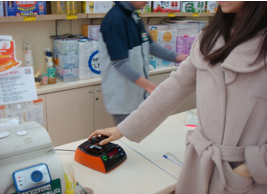
New mobile features include T-money, a prepaid smart card imbedded in Korean mobile SIM cards. Using T-money, a simple swipe of the phone will not only pay for your morning coffee but will also tell you how much human traffic you’ll face on the way to work. How’s that for a “smart” phone?
In less than a month, our IMC group will literally time warp to the mobile future. We’ll no doubt get a taste of mobile advancements, as well as some delicious dim sum. Oh, and we’ll be sure to say hi to Elroy and Astro for all you Jetsons fans back home.

***

Megan O'Malley is a student in the Masters in Integrated Marketing Communications program at Northwestern University's Medill School. She can be reached at meganomalley2010@u.northwestern.edu.

Thursday, May 20, 2010

A 30-second spot, in 30 seconds or less

By Megan O'Malley

A new ad creation interface from Visible World is breathing new life into the good ol’ 30-second spot.

Not only can clients use the resource to create ads from a selection of scenes and content in a matter of seconds, they can also instantly adjust the advertisement to fit each select individual, demographic or geographic target of television viewers.

TV advertising traditionally meant targeting audiences by assuming groups of similar consumers watched certain types of programming. With new ad customization tools, companies can adjust ads based even on live programming events.

Marketing implications? Television can now be used to target segments just like direct mail.

Take Wendy’s, which surprised viewers of an NFL football game by featuring animated raccoons whose dialogue mirrored events in the game right before commercial break.

Subaru is also taking advantage of the condition-based advertising by setting ads for vehicles in weather conditions that mirror the weather of the day in certain regions.

Customized TV advertising generation could reinvent media placement. TV as an advertising channel has drawn recent skepticism from marketers caught on a digital buzz. However, TV remains the highest used media in America by minutes used per day and television advertising still makes up a vast majority of most marketing budgets.

Jerry Dow, Medill IMC alum and Chief Marketing and Sales Officer of Suddenlink, offered insight on the importance of understanding the new with the old.

“Students with an understanding of targeting, segmentation and integration of new and old tools are going to be infinitely more valuable to take advantage of today’s customization trend. IMC students are especially needed to help those stuck in the traditional ways to understand this shift in television advertising,” he said.

The automation of television advertising presents challenges to the traditional creative process in that it requires storylines that are adaptable to varied target audiences. Although quick customization tools are no substitute for the creation of exceptional ideas and creative content, they do serve as powerful tools for creating targeted ads on the fly. Such tools allow creative marketers to quickly speak in a more engaging way to each and every consumer.

***

Megan O’Malley is a graduate student in Integrated Marketing Communications at Northwestern University's Medill School. She misses the good ol' days of Saved By the Bell and Daria on television. She can reached at MeganOMalley2010@u.northwestern.edu.

Friday, March 5, 2010

Fashion marketing's new line: Customer engagement

By Megan O'Malley

The front row seats at New York Fashion Week this year weren’t filled with the usual suspects. A new generation of style bloggers and influential social media gurus are gaining access to the coveted front row as the world of fashion marketing is going digital.

Just ask Andrei Najjar, a Medill IMC graduate and founder of Atelier Collective, who spoke at Medill about how new media is transforming the fashion and luxury goods scene. According to Najjar, “fashion marketing is moving into new media marketing more aggressively than ever. Designers are realizing that tools like Facebook, Twitter, mobile apps and YouTube are increasing ways to dimensionalize their brands, dramatically increase their audiences, and communicate more directly with their fans.”

Fashion houses, retailers and designers are joining the social media phenomenon, which is reshaping consumer dialog and how apparel, accessories and beauty products are marketed and sold. The Internet provides a platform for a new generation of style arbiters to blog or tweet about new trends from their living rooms, and designers are joining the conversation.

Even the most elite designers are starting to model an approach all marketers should mimic—direct engagement with their customers. From Diane Von Furstenberg to Gucci, brands are using Twitter to directly converse with customers. Other labels such as Burberry are streaming their shows in live 3-D, bringing the runway straight to potential buyers.

With instant media tools consumers don’t have to wait for next month’s Vogue to know what’s hot. The fashion industry is learning how to engage with consumers on real-time global platforms, integrating their communications strategy in a way that will never go out of style.

***

Megan O'Malley is a blogger at Vitamin IMC and a graduate student in the Masters in Integrated Marketing Communications program at Northwestern University's Medill School. She thinks online shopping is more dangerous than living close to Michigan Avenue. She can be reached at meganomalley2010@u.northwestern.edu